
I’ve spent years talking about reducing waste at the source. DIY makeup, reusable containers, and keeping trash out of landfills.
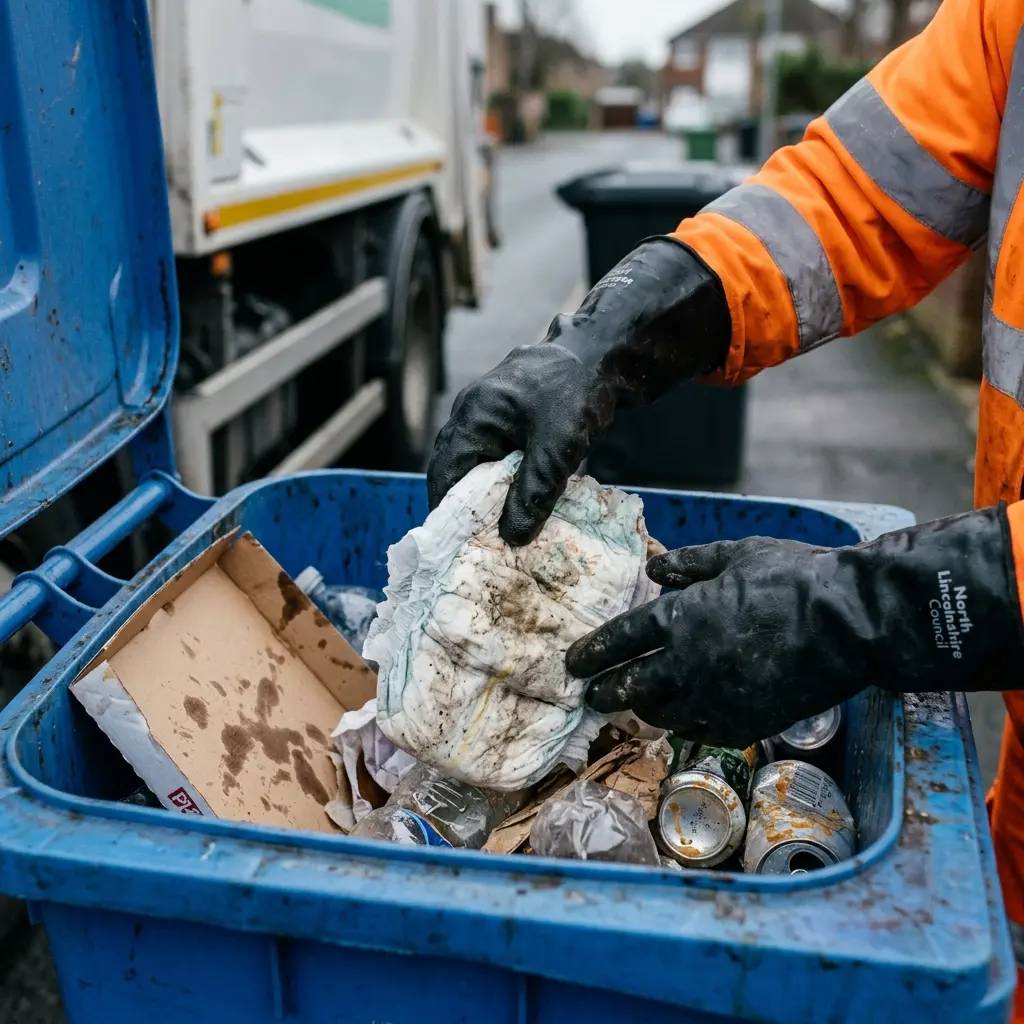
Then Lee Moran, a binman with North Lincolnshire Council, made an appeal that stopped me cold.
He’s begging households to stop contaminating recycling bins with dirty nappies, food waste, and general trash. Not because it’s inconvenient.
Because it’s making waste workers sick.
The Reality Behind Your Blue Bin
You toss something in the recycling bin and feel good about it. You’ve done your part for the environment.
When that bin arrives at the sorting facility, someone has to handle what’s inside.
Dirty nappies mixed with paper and cardboard. Rotting food stuck to plastic containers. General refuse dumped on top of recyclables because someone couldn’t be bothered to check which bin was which.
The workers who sort through this material face exposure to hepatitis and Weil’s disease. These aren’t minor health inconveniences. Weil’s disease, transmitted through rat urine that contaminates waste, can cause organ failure. Hepatitis can lead to chronic liver disease.
We talk about waste reduction like it’s an abstract environmental goal. Real people are on the receiving end of our disposal decisions.
Why Contamination Kills Recycling Programs
One dirty nappy or bag of rotting food can render pounds of otherwise recyclable material useless. The contaminated batch gets diverted to landfill instead of being processed.
Your good intentions just created more landfill waste, not less.
Local authorities spend significant money processing recycling. When contaminated loads arrive, that investment is wasted. The financial burden falls on the community, often resulting in reduced services or increased costs elsewhere.
Contamination affects the entire waste management system’s efficiency and the viability of recycling programs.
The Items That Cause the Most Problems
Waste workers consistently report these contamination culprits:
- Dirty nappies — biohazardous waste that should never enter recycling streams
- Food waste — belongs in compost or general waste, not recycling
- General refuse — mixed in because people don’t check which bin they’re using
- Plastic bags — often non-recyclable and tangle in sorting machinery
- Greasy pizza boxes — food contamination makes cardboard unrecyclable
Each of these items creates specific problems for processing facilities and the people working there.
The Environmental Literacy Gap
I’ve written about making your own makeup to reduce packaging waste. I’ve shared tips on avoiding single-use plastics. I’ve advocated for buying local to reduce transportation emissions.
But if we can’t get basic waste sorting right, those efforts are undermined.
The problem isn’t that people don’t care. Many households don’t know what belongs in each bin. Local guidelines vary. Recycling symbols confuse people. And when you’re rushing to get bins out before collection day, mistakes happen.
This is a massive gap in environmental literacy.
We need clear, consistent education about what goes where. Not a crumpled pamphlet that arrived when you moved in five years ago and is now buried in a drawer somewhere. Ongoing, accessible information that meets people where they are.
What Actually Belongs in Recycling Bins
Check your local authority’s specific guidelines, but generally:
Usually recyclable:
- Clean paper and cardboard (no grease or food residue)
- Glass bottles and jars (rinsed)
- Metal cans and tins (rinsed)
- Rigid plastic containers marked with recycling symbols (rinsed)
- Aluminum foil (clean, bundled into a ball)
Never recyclable in standard bins:
- Dirty nappies (general waste)
- Food waste (compost or general waste)
- Soft plastics and film (often require special collection points)
- Broken glass (general waste, wrapped safely)
- Polystyrene packaging (general waste or special collection)
- Textiles (donate or use textile recycling bins)
When in doubt, don’t contaminate. Put it in general waste or contact your local authority. Better safe than sorry.
The Human Element We Ignore
Waste management is infrastructure we take for granted. Bins get emptied. Trash disappears. Recycling happens out of sight.
But people make this system work. People who wake up early, work in all weather conditions, and handle materials most of us would never want to touch.
When Lee Moran asks households to stop contaminating bins, he’s not being picky. He’s asking for basic respect for his health and safety.
A few households create hazardous working conditions for many workers.
Your quick decision about which bin to use has direct consequences for someone else’s health and ability to do their job safely.
What This Means for Your Waste Reduction Efforts
Look, I still believe in making your own products when possible. Reducing packaging waste matters. Buying local and choosing reusable over disposable — these things count.
Proper waste sorting is as important as waste reduction.
Why this matters for your zero-waste journey:
Contaminated recycling undermines your reduction efforts. If you’re carefully choosing products with recyclable packaging, but then contaminating your recycling bin, you’re negating that effort. The recyclables you thought you were diverting from landfill end up there anyway.
Proper sorting respects the entire waste management chain. From collection workers to sorting facility staff to recycling processors, your correct disposal makes their work safer and more effective.
Clean recycling streams improve program viability. When recycling programs demonstrate high contamination rates, they face budget cuts or elimination. Your proper sorting helps maintain these essential services.
Practical Steps You Can Take Today
1. Know your local guidelines. Contact your council or waste authority for specific information about what they accept. Save this somewhere you’ll actually look at it — not filed away to be forgotten.
2. Rinse recyclables. A quick rinse removes food residue that causes contamination. You don’t need to scrub items spotless (I’m not asking you to become a dishwashing perfectionist), just remove obvious food waste.
3. Create a sorting system at home. Use clearly labeled bins for different waste types. Make it easy for everyone in your household to sort correctly.
4. When uncertain, choose general waste. Contaminating recycling is worse than putting a recyclable item in general waste. If you’re not sure, don’t guess. Really.
5. Educate your household. Make sure everyone who uses your bins understands what goes where. This is especially important if you have children, guests, or housemates.
6. Check before you chuck. Take two seconds to verify you’re using the correct bin. Those two seconds prevent contamination that affects entire loads.
The Bigger Picture
This issue reveals something important about environmental responsibility.
We focus on individual consumption choices. We buy eco-friendly products. We reduce single-use items. We feel good about our sustainable lifestyle choices.
But environmental responsibility also means understanding the systems our waste enters and the people who manage those systems.
It means recognizing that sustainability isn’t just about what we buy or don’t buy. It’s about how we participate in shared infrastructure and whether our participation helps or hinders the people who make that infrastructure work.
Your recycling bin is a shared resource. When you contaminate it, you create problems that ripple through the entire waste management system.
Moving Forward
Check your bins before collection day. Rinse that yogurt container. Put dirty nappies in general waste where they belong. Take five minutes to review your local authority’s guidelines.
These small actions matter for workers who handle your waste, the viability of recycling programs in your community, and the environmental impact you’re trying to reduce.
Waste reduction starts with not creating waste. But proper waste sorting ensures the waste you do create goes to the right place and doesn’t create additional problems.
Your zero-waste journey doesn’t end when you toss something in a bin. It continues through the system that processes that waste. That system depends on you getting it right.
💡 Action step: This week, contact your local waste authority and request current recycling guidelines. Print them. Stick them on your fridge. Save them on your phone. Whatever works — just make sure everyone in your household can find them.
Binmen and women are asking for your help. They’re asking you to stop contaminating recycling bins with items that make them sick and undermine the system.
That’s not too much to ask.
