
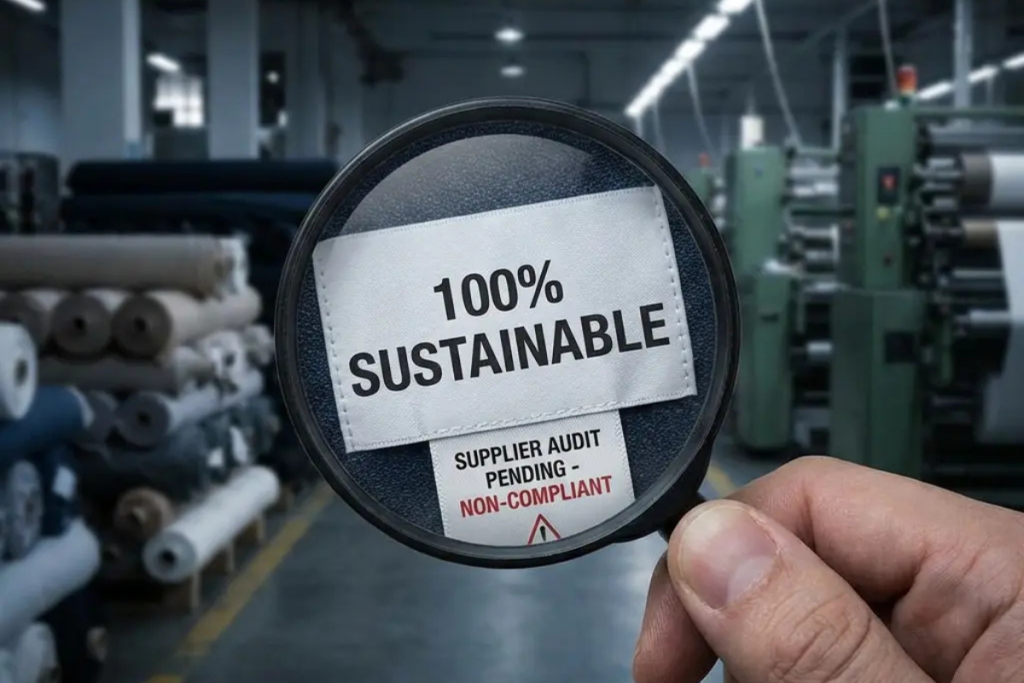
On January 22, 2025, the Competition and Markets Authority published updated guidance on environmental claims—”eco-friendly,” “sustainable,” “carbon neutral.” The claims brands put on packaging, websites, and marketing materials.
On January 22, 2025, the Competition and Markets Authority published updated guidance on environmental claims. You know the kind—”eco-friendly,” “sustainable,” “carbon neutral.” The claims brands put on packaging, websites, and marketing materials to signal they care about the planet.
The CMA can now fine you up to 10% of your global annual turnover or £300,000 (whichever is greater) for misleading environmental claims. No court proceedings required. They can also add daily penalties calculated by your global turnover until you fix the problem.
You’re now liable for claims your suppliers make.
Your Supplier’s Problem Is Now Your Problem
If you stock a product with false green claims, you face liability alongside the manufacturer. The CMA warned that some businesses may need to reconsider trading relationships if there’s insufficient information in the supply chain.
You can’t rely blindly on supplier assurances anymore.
You need to take “reasonable steps” to verify environmental claims. What counts as reasonable depends on how significant the claim is, whether evidence is available, and what resources your business has. But the baseline: you need documentation that proves what you’re saying is true.
The CMA plans to tackle the “most egregious” breaches first—aggressive sales practices, objectively false information, and practices that are unfair by law. They’re prioritizing cases involving systemic governance and compliance failures.
Liability doesn’t depend on intent. An “innocent” or “unwitting” breach is still a breach when the CMA pursues civil enforcement action.
Consumer Trust Has Collapsed
Consumer belief that companies are engaging in greenwashing has nearly doubled. It went from 33% in 2023 to 62% in 2025, according to the Capgemini Research Institute.
91% of consumers now believe at least some brands engage in greenwashing.
Over half of UK consumers are prepared to boycott brands over misleading green claims. Almost one in five have already changed their purchasing decisions because of greenwashing.
The trust is gone. And when trust collapses, regulatory enforcement follows.
Despite an overall decline in greenwashing incidents in the EU, Europe and North America experienced a 27% increase in high-severity greenwashing cases in 2024. High-severity cases globally surged by over 30% in the same period.
Brands are making fewer claims overall. But the ones they’re making are becoming more problematic and attracting greater regulatory attention.
Fashion Is in the Crosshairs
Approximately 60% of fashion brands’ sustainability claims have been identified as unsubstantiated or misleading.
In September 2024, the CMA sent letters of concern to 17 well-known fashion brands advising them to review their sustainability claims. The fashion industry is perceived by 57% of consumers as one of the most likely sectors to engage in greenwashing, second only to the energy sector at 58%.
If you’re in fashion, you’re already under scrutiny.
Regulators are moving from education to enforcement. The CMA’s approach: establish clear guidelines first, then escalate enforcement actions. This “guidance-first, enforcement-second” strategy gives businesses notice while building a foundation for future legal action.
Updated guidance signals the transition from education to accountability.
This Is a Board-Level Issue Now
Environmental, sustainability, and governance issues are board-level consumer protection risks. You need robust internal controls, documented substantiation, and active supply chain oversight.
Green claims compliance isn’t a marketing issue anymore. It requires cross-functional governance involving legal, compliance, sustainability, procurement, and senior management.
Businesses without documented review, substantiation, and escalation processes face heightened enforcement scrutiny and penalties, particularly where deficiencies are systemic.
Research using Structural Equation Modeling shows that greenwashing has a significant negative impact on both consumer trust (β =-0.68) and brand loyalty (β =-0.45). When consumers perceive a brand as misleading, their likelihood of repurchasing and recommending it drops.
You’re not just risking fines. You’re risking your brand.
The Global Regulatory Wave Is Building
The CMA’s guidance is part of a global trend. Similar enforcement priorities are emerging from the U.S. Federal Trade Commission (updated Green Guides, 2024), the European Commission (Green Claims Directive proposal, 2023), and the Australian Competition & Consumer Commission (2023).
In Asia, Singapore’s new Guidelines on Quality-related claims (2025), Japan’s enforcement under the Unjustifiable Premiums and Misleading Representations Act, and South Korea’s Environmental Labeling and Advertising Review Guidelines have similar substantiation requirements.
Multinational businesses need to adopt compliance frameworks that meet the most stringent applicable standard.
A marketing claim acceptable in one jurisdiction may violate standards in another. You need market-specific communications strategies. Global brand messaging is getting more complex, not simpler.
What This Means for Supply Chain Relationships
Supply chain accountability has profound implications for global trade relationships and supplier contracts.
You may need to renegotiate agreements with suppliers to include environmental verification requirements, audit rights, and documentation standards. This reshapes supplier selection criteria. Environmental transparency is becoming as critical as price and quality.
Smaller suppliers lacking sophisticated sustainability tracking systems may face competitive disadvantages. Or they’ll be forced to invest in compliance infrastructure they can’t afford.
This regulatory shift reframes how authorities view corporate environmental claims. They’ve moved from marketing speech protected under commercial expression to consumer protection issues subject to strict liability standards.
Environmental marketing is now a legal compliance matter requiring C-suite attention, legal review, and dedicated resources.
What You Need to Do Right Now
Audit your current environmental claims. Every single one. On your website, packaging, marketing materials, and social media. If you can’t substantiate it with documentation, remove it.
Map your supply chain. Identify where environmental claims originate. Who’s making them? What evidence exists? Where are the gaps in verification?
Establish verification processes. Create documented procedures for reviewing and approving environmental claims before they go public. Involve legal, compliance, and sustainability teams.
Review supplier contracts. Add environmental verification requirements, audit rights, and documentation standards. Make compliance a contractual obligation.
Train your teams. Marketing, sales, procurement, and customer service need to understand what constitutes a compliant environmental claim and what doesn’t.
Document everything. Keep records of how you substantiate claims, what evidence you rely on, and what verification steps you take. If the CMA comes knocking, you need to show your work.
The Real Cost of Getting This Wrong
The financial penalties are significant. 10% of global turnover is not a slap on the wrist.
But the reputational damage is worse. When consumer trust is already at historic lows, getting caught making unsubstantiated environmental claims can permanently damage your brand.
The CMA’s enforcement escalation reflects growing consumer awareness and demand for genuine environmental action. Businesses can no longer treat environmental marketing as a low-risk communication strategy.
You need robust verification systems and transparency mechanisms extending beyond your direct operations to suppliers, manufacturers, and distribution partners.
The timing of this guidance suggests regulators are preparing for increased enforcement actions. Investigations, fines, and public naming of non-compliant businesses are coming.
Companies making environmental claims without adequate supply chain visibility and documentation now face material legal and reputational risks.
Looking Forward
The regulatory landscape is shifting fast. What was acceptable marketing language two years ago is a compliance liability today.
The CMA’s focus on supply chains demonstrates a systems-thinking approach to regulation. Instead of evaluating individual marketing statements in isolation, they’re examining the entire chain of responsibility supporting environmental claims.
Think holistically about your environmental claims. Consider every touchpoint from raw material sourcing to end-of-life product disposal.
The UK’s action may catalyze similar moves in the EU, US, and other major markets, creating a cascading effect of enhanced scrutiny.
Environmental claims compliance is becoming a competitive differentiator. Brands that can substantiate their claims with transparent, verifiable evidence will build trust in a market where trust is scarce.
Brands that don’t will face enforcement actions, consumer boycotts, and long-term brand damage.
The choice is clear. The timeline is short.
Start now.
