
I’ve spent years watching the transport decarbonization conversation. The narrative is always the same: electrification is the future, batteries will solve everything, anything else delays the inevitable.
Then I look at the data.
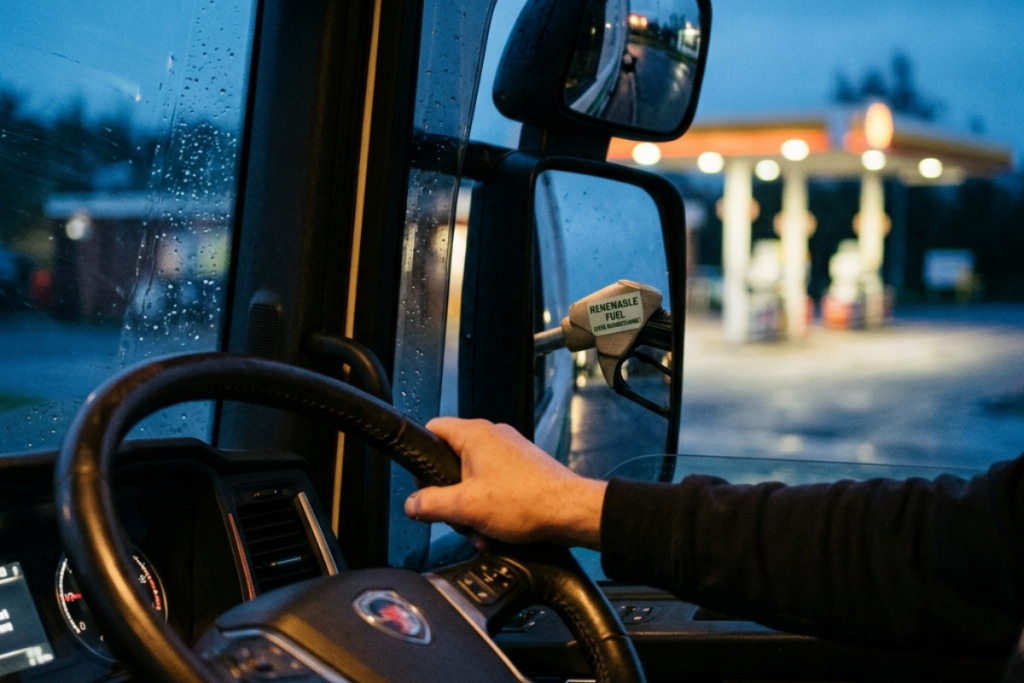
Right now, approximately 12,000 heavy goods vehicles in the UK run on renewable fuels like hydrotreated vegetable oil (HVO) and biomethane. These trucks deliver real emissions reductions today, not in 2030 or 2035. They operate on existing infrastructure, carry full payloads, and complete long-haul routes without range anxiety.
Not a pilot program. A functioning alternative that gets overlooked because it doesn’t fit the electrification storyline.
Why Long-Haul Trucking Creates an Electrification Problem
Long-haul trucks represent only 9 percent of the global cargo vehicle fleet. But they contribute 39 percent of trucking sector greenhouse gas emissions.
In the United States, these vehicles carry 71 percent of all payload. Demand for long-haul freight is expected to double between 2020 and 2050.
Obvious targets for electrification. Except it’s more complicated.
Battery weight matters when you’re hauling freight. A typical 44-ton diesel truck can carry about 29 tons of payload. Electric trucks need battery packs weighing multiple tons, which directly reduces how much cargo you can move. For operators running at high capacity, this payload loss translates to lost revenue on every trip.
The charging infrastructure challenge compounds the problem. Installing commercial charging stations costs upward of $100,000. Depot redesigns, grid capacity upgrades, and operational disruptions add more layers of complexity and expense.
Even with forecasted improvements in battery energy density, long-haul trucks remain the most challenging on-road vehicle type to electrify. Current battery technologies struggle to achieve the required range for these applications.
I’m not arguing against electrification. Certain use cases face barriers that won’t disappear soon.
What Waste-Based Renewable Fuels Actually Deliver
When you hear “renewable fuels,” be skeptical. The term covers everything from genuinely sustainable solutions to greenwashing. Feedstock is what matters.
HVO produced from waste-derived materials like used cooking oil and animal by-products achieves lifecycle greenhouse gas savings exceeding 85 percent compared to fossil diesel. Some sources report up to 90 percent reductions when using waste feedstocks.
Biomethane tells a more interesting story. When produced from wet manure through anaerobic digestion, lifecycle emissions become carbon negative. Current biomethane lifecycle greenhouse gas emissions savings range from 70 percent to 124 percent.
Capturing methane from manure prevents release of a greenhouse gas 28 times more potent than carbon dioxide over 100 years. You eliminate emissions and generate renewable fuel simultaneously.
The UK market for renewable fuels relies almost entirely on waste-based feedstocks. Both HVO and biomethane supplied domestically come from 100 percent sustainable sources: used cooking oil, animal by-products, food waste, agricultural residues, slurry, manure, and sewage sludge.
Waste-based feedstocks avoid the land-use conflicts that plague crop-based biofuels while delivering measurable emissions reductions.
The Trust Problem and Why Verification Matters
Environmental claims without verification create problems. Companies make sustainability promises. Consumers and regulators grow skeptical. Trust erodes, hurting legitimate solutions.
Assurance frameworks solve this.
The Renewable Fuels Assurance Scheme (RFAS) covers the complete supply chain from feedstock collection through production and distribution to end customers. More than 800 organizations now use RFAS-approved sustainable fuels, with 54 approved companies supplying biodiesel, renewable diesel including HVO, and biomethane.
The scheme requires ongoing compliance monitoring with annual audits. The newly launched RFAS Fleet scheme extends verification downstream to end customers, providing independently verified, journey-specific environmental information.
You get documentation on fuel type, volume used, feedstock origin, and verified well-to-wheel greenhouse gas emissions savings.
This goes beyond compliance. Transport operators can now offer customers verifiable low-carbon services backed by third-party data. When companies report Scope 3 emissions, they need documentation for indirect emissions throughout their supply chains.
Transport represents a significant portion of most companies’ indirect carbon footprints. Verified low-carbon logistics services become a commercial differentiator.
Why Drop-In Solutions Create Immediate Impact
HVO offers something rare in decarbonization: immediate deployment without disruption.
No vehicle modifications. No new infrastructure. No waiting for fleet turnover or technology improvements.
A diesel truck entering service today will likely operate into the 2030s. That vehicle will consume thousands of gallons of fuel over its lifetime. Switching to waste-based HVO cuts lifecycle emissions by more than 85 percent from day one.
Long-haul trucks cover high mileage over extended distances. Small reductions in carbon intensity per gallon multiply across high fuel consumption, creating substantial total emissions reductions.
Act now while building tomorrow. Deliver measurable impact during lengthy transitions.
The UK government confirmed that biofuels delivered two-thirds of transport’s greenhouse gas savings between 2008 and 2022. Supported by the Renewable Transport Fuel Obligation, biofuels made up 7.7 percent of surface transport fuel in 2024 and delivered 55 million metric tons of carbon dioxide equivalent savings since 2008.
These numbers represent real atmospheric impact, not theoretical reductions.
The Growing Momentum You’re Not Hearing About
While headlines focus on electric vehicle announcements, renewable fuel adoption expands quietly through operational decisions.
The UK fleet of bio-CNG fueled heavy goods vehicles grows steadily despite declining overall truck registrations. More than 2,075 trucks now use CNG Fuels’ network, with plans to double refueling capacity to 20,000 HGVs per day by end of 2028.
European demand for renewable diesel is projected to reach more than 20 million metric tons in 2027, driven by higher mandates and implementation of RED III and Fuel EU Maritime regulations. Germany alone expects incremental demand of 1 million to 2 million tons.
Growth without fanfare. No dramatic breakthroughs required. Operators make pragmatic choices based on economics, operational requirements, and emissions goals.
The cost advantage of biomethane over HVO biodiesel continues to widen. Bio-CNG offers competitive economics alongside environmental benefits, particularly for operators with predictable routes and refueling access.
What This Means for the Transition Ahead
The transition won’t follow a single path. Different use cases will optimize for different solutions based on operational constraints, economics, and infrastructure.
Urban delivery vehicles with predictable routes and depot charging may electrify quickly. Long-haul trucks hauling heavy freight face different constraints.
Payload capacity, charging time, infrastructure costs, and operational patterns all factor in. A 44-ton truck running double shifts can’t afford the downtime or payload loss that current battery technology requires.
The particular challenge for decarbonization sits in the 40-44 ton gross vehicle weight category with high payloads and high annual mileage. Electric trucks aren’t currently available in 6×2 configurations compatible with three-axle UK trailers to run at 44 ton gross vehicle weight due to low battery energy density.
This doesn’t mean electrification won’t serve these applications. It means we need solutions that work today for vehicles that will operate for another decade.
Renewable fuels fill this gap. They deliver immediate emissions reductions using existing assets while longer-term technologies mature.
The Verification Arms Race Coming Next
As environmental commitments become marketing tools, third-party validation will shift from optional to mandatory.
Companies lacking verifiable sustainability claims will face scrutiny and competitive disadvantage. Customers will demand documentation. Regulators will tighten requirements. Investors will price in climate risk.
The emergence of assurance schemes like RFAS signals this shift. Sustainability claims are entering a verification arms race where transparency determines credibility.
Beyond renewable fuels, any environmental claim without independent verification will face skepticism. Documentation and compliance costs will become standard business expenses.
For transport operators, this creates both challenge and opportunity. The challenge: implementing systems to track, verify, and report emissions. The opportunity: offering customers verifiable low-carbon services that competitors can’t match.
What You Should Watch For
I’m tracking several indicators:
Feedstock availability and sustainability standards. Demand for waste-based renewable fuels is growing. Feedstock sourcing becomes critical. Verification of waste streams, sustainability criteria, and supply chain transparency will face increasing scrutiny.
Infrastructure investment patterns. Where capital flows reveals which technologies gain momentum. Renewable fuel production capacity, distribution networks, and refueling stations indicate market confidence.
Total cost of ownership comparisons. Purchase price tells part of the story. Operating costs, infrastructure investments, payload capacity, and residual values complete it.
Policy frameworks balancing multiple technologies. Mandating specific technologies risks locking in solutions before alternatives mature. Flexible frameworks that reward emissions reductions enable innovation.
Corporate Scope 3 reporting requirements. As companies face pressure to document and reduce indirect emissions, demand for verified low-carbon transport will increase. This creates market pull beyond mandates.
The Bottom Line
Twelve thousand trucks running on renewable fuels represent more than a statistic. They prove that practical decarbonization happens through operational decisions, not just technological breakthroughs.
Emissions reductions exceeding 85 percent today. Existing infrastructure. Full payload capacity. Waste-based feedstocks that avoid land-use conflicts while capturing methane that would otherwise enter the atmosphere.
Electrification will play an important role in transport decarbonization. But pretending it’s the only solution ignores operational realities and delays action on vehicles that will run for another decade.
Messier, more diverse, and more pragmatic than simplified narratives suggest. Different technologies will serve different use cases based on what works in real-world operations.
Renewable fuels aren’t delaying the transition. They’re enabling it—delivering immediate impact while longer-term solutions develop.
The question isn’t which technology will win. It’s how quickly we deploy every available solution to reduce emissions from vehicles operating today.
Because the atmosphere doesn’t care about our preferred technology pathway. It responds to actual emissions reductions.
And right now, 12,000 trucks are delivering those reductions while the rest of us argue about the future.
