
The beauty industry generates 877 pounds of waste per minute. I watched one salon cut their disposal costs by 60% in three months using the framework I’m about to share.
Here’s the problem: most waste reduction advice is garbage. It’s either too vague to actually implement or so extreme it shuts down operations.
So I built a framework that works in the real world. No greenwashing. No unrealistic promises. Just a system that gets salons to 90% waste diversion without destroying profit margins.
Why Nail Salons Need This Framework Now
A typical full-service salon produces roughly 1.5 pounds of waste per client. That adds up to 30-45 pounds daily for busy locations serving 20-30 guests. Multiply that across the industry and you’re looking at 150 million pounds of salon trash hitting landfills every year.
But here’s what changed my perspective on this problem.
Consumers will pay an average of 9.7% more for sustainably produced goods. Some studies show premiums up to 27%. That’s not future trend forecasting. That’s happening right now.
Your clients want you to solve this. They’ll pay for it. You just need a system that doesn’t require a sustainability degree to implement.
Step 1: Run a Waste Audit (The Foundation Everything Else Depends On)
You can’t fix what you don’t measure. I know that sounds obvious, but I’ve watched dozens of salons skip this step and wonder why their sustainability efforts fail.
A waste audit transforms disposal from a guess into a decision.
Here’s how I run them:
-
Pick a typical week. Not your slowest week or your busiest holiday rush. A normal operational week.
-
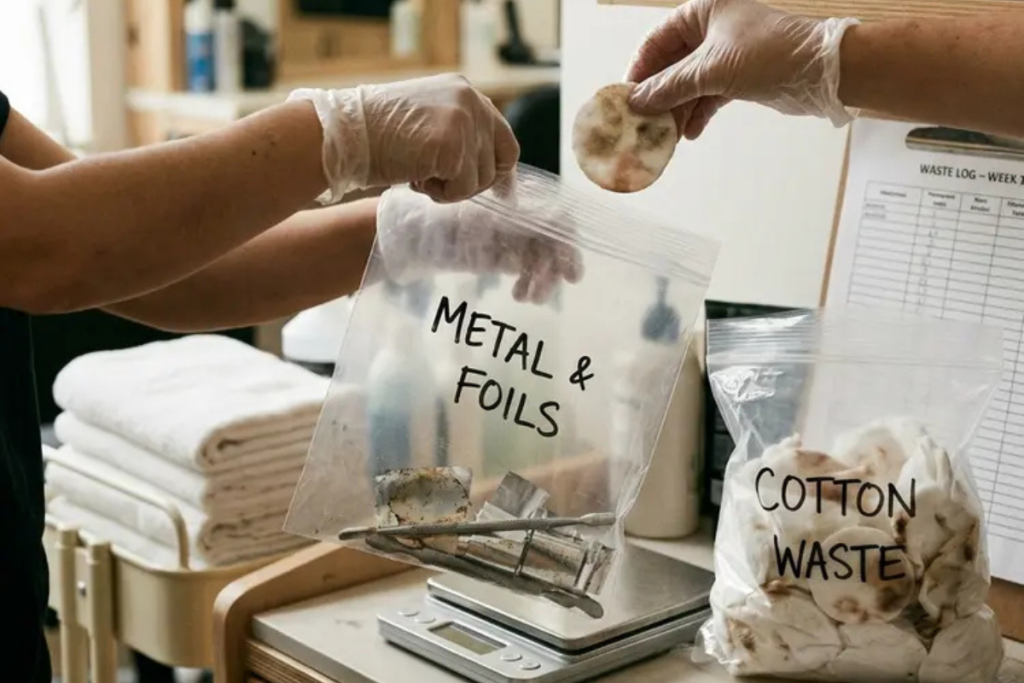
Separate everything. Cotton rounds, acetone-soaked materials, product packaging, paper towels, food waste, general trash. Weigh each category. Track the volume.
-
Use a simple spreadsheet. Category, weight, percentage of total waste, disposal method, estimated cost. That’s it.
This data tells you where to focus. Maybe you’re generating three pounds of cotton waste daily but only half a pound of packaging. Your intervention priorities just became crystal clear.
💡 Pro tip: Photograph your waste bins before and after the audit. Visual documentation makes the problem real for your team in ways that numbers alone don’t.
Step 2: Reduce at the Source (This Beats Recycling Every Time)
The waste hierarchy puts reduction at the top for a reason. Manufacturing a single aluminum can requires about 95% more energy than recycling one.
Prevention beats processing. Always.
Three high-impact reduction strategies:
Digital receipts. Switch to email or text receipts. You eliminate paper waste and build your email list simultaneously. I’ve seen salons cut paper consumption by 40% with this single change.
Bulk purchasing and refill systems. Stop buying individual bottles of acetone or alcohol. Get gallon containers and refill smaller dispensers. You reduce packaging waste by 70-80% and cut costs.
Reusable alternatives. Replace disposable nail files with washable options. Switch from paper towels to cloth towels you launder. Use glass bowls instead of disposable soaking containers.
I’m not suggesting you compromise sanitation. I’m suggesting you question every single-use item and ask if a reusable alternative exists that meets health code requirements.
Because most of the time, it does.
Step 3: Implement Strategic Reuse Programs
Reuse sits below reduction in the waste hierarchy. It extends product life without energy-intensive reprocessing.
Reuse opportunities fall into two categories: internal operations and client-facing programs.
Internal reuse:
Buy second-hand furniture, mugs, and décor. I’ve helped salons furnish entire break rooms from thrift stores for less than the cost of new items, while diverting functional goods from landfills.
Repurpose glass product containers as storage for cotton rounds, bobby pins, or small tools. Clean them thoroughly and they work perfectly.
Create a towel rotation system. Instead of disposable options, invest in quality salon towels and establish a professional laundering schedule.
Client-facing programs:
Offer product refills. When clients finish a bottle of cuticle oil or hand cream you sell, let them bring back the container for a discounted refill. You reduce packaging waste and increase customer retention.
This builds loyalty. People remember businesses that make sustainable choices easy.
Step 4: Partner with Specialized Recycling Services
Standard municipal recycling fails service industries. Contaminated foils, used cotton rounds, and chemical-soaked materials don’t fit residential recycling streams.
You need specialized infrastructure.
Organizations like Green Circle Salons can recycle up to 95% of beauty waste, including hair clippings, foils, and excess color. They’ve built systems specifically for salon waste streams that municipal programs ignore.
What I recommend recycling through specialized services:
Metal implements and contaminated foils. Standard recycling centers reject these due to chemical contamination. Specialized services have the processing capabilities to handle them safely.
Compostable towels and certain paper products. If you switch to compostable salon towels, partner with commercial composting facilities that accept them.
Product packaging that’s technically recyclable but contaminated. Empty nail polish bottles, acetone containers, and similar items need specialized handling.
Yes, this costs money. I’ll address that in a minute.
Step 5: Convert Unavoidable Waste to Energy
Perfect circularity doesn’t exist yet. Some waste streams can’t be reduced, reused, or recycled with current technology.
Waste-to-energy conversion is better than landfill storage.
I’m not pretending this is ideal. Burning waste for energy still releases emissions. But it prevents long-term environmental contamination, extracts value from materials, and keeps them out of landfills where they’ll sit for centuries.
To be considered zero waste, you need to divert 90% of waste away from landfills or incineration. Waste-to-energy helps you hit that threshold for the unavoidable 10%.
Work with your waste management provider to identify waste-to-energy facilities in your area. Route non-recyclable, non-compostable materials there instead of landfills.
The Business Model That Makes This Financially Viable
Here’s where most sustainability frameworks fall apart. They ignore economics.
I recommend a transparent client-funded green fee. Add $1-2 to each service. Communicate exactly what it funds: specialized recycling partnerships, compostable supplies, waste auditing, and sustainable product sourcing.
This works for three reasons:
It’s cost-neutral or revenue-positive. You’re not absorbing sustainability costs that squeeze margins. You’re distributing them across clients who will pay for environmental initiatives.
It builds client relationships. Transparency creates trust. When you explain where their dollar goes, you invite them into your sustainability journey. That creates investment in your business.
It differentiates you competitively. More than 80% of consumers say they’re willing to pay more for sustainable products. You’re giving them the opportunity to align their spending with their values.
I’ve seen this model work across dozens of salons. The key is transparency. Don’t hide the fee in your pricing. Make it visible and explain it proudly.
How to Measure Progress and Keep Momentum
Here’s the thing about sustainability, it needs ongoing measurement or it falls apart. I track three metrics:
Waste diversion rate: Percentage of total waste diverted from landfills. Your goal is 90% or higher.
Cost per pound of waste managed: Total waste management costs divided by pounds of waste generated. This should decrease over time as reduction strategies take effect.
Client awareness and engagement: Track how many clients ask about your sustainability practices, mention them in reviews, or participate in refill programs.
I review these monthly. Quarterly reviews identify what’s working and what needs adjustment.
You’ll have setbacks. New products will arrive in excessive packaging. A supplier will discontinue a sustainable option. That’s normal. The framework isn’t about perfection. It’s about consistent improvement.
What I’ve Learned From Implementing This Framework
The biggest barrier isn’t cost. It’s not even logistics.
It’s the assumption that sustainability requires sacrifice. That you have to choose between profit and planet.
I’ve watched this framework improve profit margins through reduced disposal costs and increased client loyalty. I’ve seen it attract customers who specifically search for sustainable salons. I’ve watched it improve employee satisfaction because people want to work for businesses that align with their values.
The beauty industry contributes to one-third of all landfill waste in some regions. That’s a problem. But it’s also an opportunity.
You can differentiate yourself, build deeper client relationships, and reduce environmental impact simultaneously. You just need a framework that works with real-world constraints while pushing toward change.
This is that framework. I’ve tested it. I’ve refined it. I’ve watched it work in businesses with tight margins and limited resources.
Start with the audit. The rest follows from there.
